Perusahaan Manufaktur Kabinet Switchgear Tegangan Tinggi & Tegangan Rendah. lebih dari 17 tahun pengalaman desain dan RD.


-
Tinggalkan pesan : qiuwenjie@gaoboele.com
-
Telepon : +86 -17329948916

Tinggalkan pesan : qiuwenjie@gaoboele.com
Telepon : +86 -17329948916

Switchgear is a critical part of any electrical power distribution system. It is used to control, protect, isolate, and distribute electrical power safely across industrial plants, commercial buildings, substations, infrastructure projects, utilities, and renewable-energy facilities.
However, not all switchgear serves the same purpose. One of the most important distinctions is between high-voltage switchgear and low-voltage switchgear.
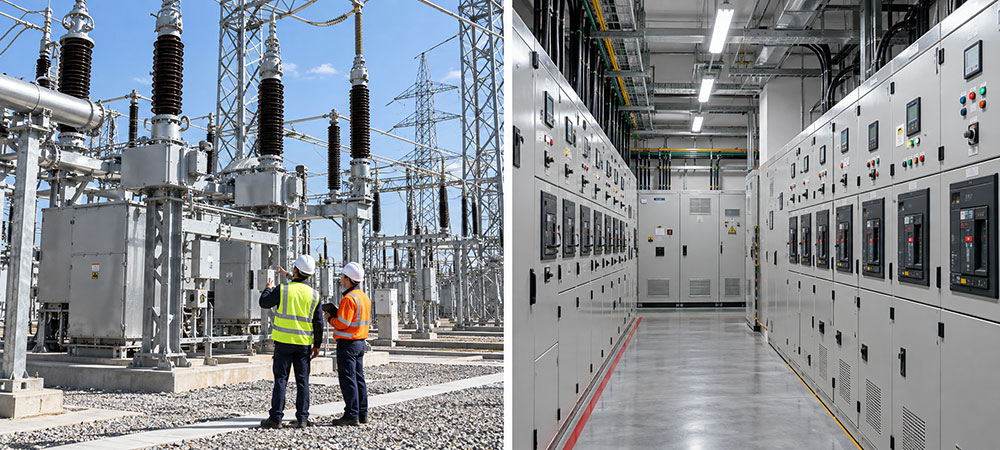
Understanding the difference helps project owners, EPC contractors, electrical engineers, and procurement teams choose the correct equipment for each stage of a power system.
GAOBO SWITCHGEAR MANUFACTURER provides customized high-voltage, medium-voltage, and low-voltage switchgear solutions for international power distribution projects.
High-voltage switchgear is used in electrical systems where power must be transmitted, received, switched, protected, or distributed at relatively high voltage levels.
Depending on the country, industry, and standard, voltage classifications may vary. In many industrial applications, equipment above 1kV is generally treated as medium- or high-voltage equipment, while transmission systems operate at much higher voltage levels.
Typical GAOBO high- and medium-voltage products include:
High-voltage switchgear is commonly installed upstream in the electrical network, where incoming utility power or transformer circuits must be controlled and protected.
Low-voltage switchgear is generally used for electrical systems up to 1,000V AC.
It distributes power from transformers or main incoming circuits to individual loads such as motors, machines, lighting, HVAC systems, pumps, production equipment, and building services.
Common low-voltage switchgear includes:
Low-voltage systems are widely used in factories, commercial buildings, data centers, water-treatment facilities, industrial plants, and infrastructure projects.
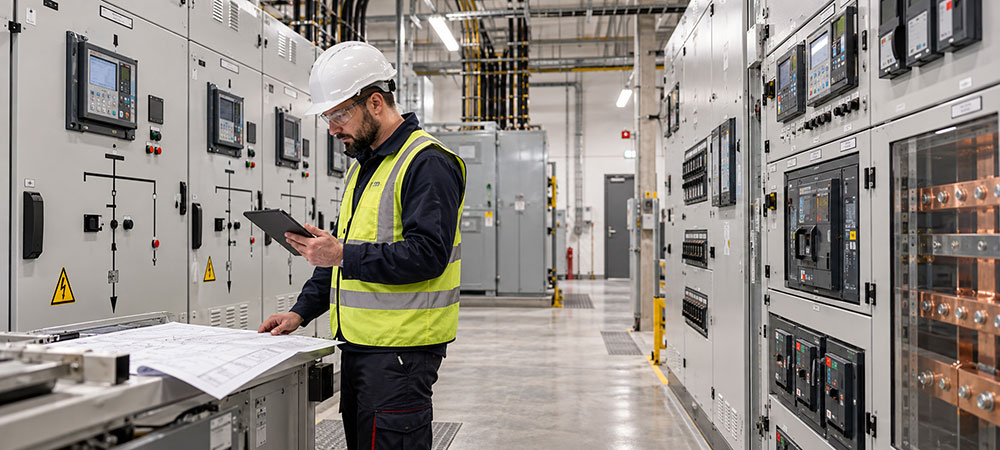
The most obvious difference is operating voltage.
High-voltage or medium-voltage switchgear is used closer to the incoming power source and transformer side of the electrical system.
Low-voltage switchgear is installed after the voltage has been stepped down and is responsible for distributing power to individual loads.
For example, an industrial facility may receive power at 10kV or 35kV through medium-voltage switchgear, then use transformers to reduce the voltage to 400V for low-voltage distribution.
High-voltage switchgear typically uses vacuum circuit breakers or other specialized switching devices designed for higher insulation and interruption requirements.
These breakers must safely interrupt fault currents while operating under much higher electrical stress.
Low-voltage switchgear commonly uses:
The breaker type is selected according to current rating, breaking capacity, protection requirements, and application.
High-voltage switchgear generally requires more complex safety interlocking.
Typical interlocking may involve:
These systems help prevent unsafe operating sequences.
Low-voltage switchgear also includes mechanical and electrical interlocking, especially in ATS, bus-coupler, or withdrawable systems, but the design is usually different from high-voltage equipment.
High-voltage metal-clad switchgear is often divided into separate compartments for circuit breakers, busbars, cables, and low-voltage control components.
This compartmentalization helps improve safety and fault isolation.
Low-voltage cabinets may use fixed, withdrawable, or modular structures depending on the project.
For example, GGD uses a fixed structure, while GCK and MNS systems use withdrawable functional units.
High-voltage switchgear is commonly used in:
Low-voltage switchgear is commonly used in:
In many projects, both types are used together as part of a complete power distribution system.
High-voltage systems often use advanced protection relays for overcurrent, earth fault, transformer protection, feeder protection, and other functions.
Low-voltage systems rely more heavily on breaker protection, motor protection, metering, PLC control, and energy monitoring.
Both high- and low-voltage switchgear can now include intelligent monitoring, communication, temperature monitoring, digital meters, and remote-control functions.
GAOBO SWITCHGEAR MANUFACTURER can provide both high-voltage and low-voltage switchgear according to customer drawings and technical requirements.
Customization can include:
For projects requiring both MV/HV and LV systems, using one switchgear manufacturer can simplify technical coordination between incoming power, transformers, low-voltage distribution, automation, and monitoring.
The main difference between high-voltage and low-voltage switchgear lies in voltage level, breaker technology, insulation, cabinet structure, protection requirements, and application.
High-voltage switchgear manages power closer to the utility or transformer side of the network, while low-voltage switchgear distributes electricity to individual equipment and loads.
For industrial, commercial, infrastructure, and renewable-energy projects, both systems must be correctly engineered to create a safe and reliable power distribution network.
GAOBO SWITCHGEAR MANUFACTURER provides customized HV, MV, and LV switchgear solutions for global projects, with factory-direct engineering, manufacturing, testing, and technical support.
The main difference is the operating voltage and system position. High-voltage switchgear is used closer to incoming utility power and transformers, while low-voltage switchgear distributes power to final loads.
In many industrial discussions, medium-voltage switchgear is grouped with high-voltage equipment, although technical standards may classify voltage levels separately. The exact classification depends on the applicable standard and market.
Yes. Large factories, substations, data centers, and infrastructure projects commonly use both. High-voltage or medium-voltage equipment receives power, transformers reduce the voltage, and low-voltage switchgear distributes it to end users.
High-voltage switchgear generally requires more complex insulation, mechanical interlocking, protection relays, and operating procedures. However, advanced low-voltage systems can also be complex when they include automation, monitoring, motor control, and redundancy.
Yes. GAOBO SWITCHGEAR MANUFACTURER can customize high-, medium-, and low-voltage switchgear according to single-line diagrams, rated current, short-circuit capacity, breaker brands, protection requirements, cabinet dimensions, and communication functions.